NAVCHETAN

NAVCHETAN

NAVCHETAN

INDIA, Jaipur

Objective

Rehabilitation and social inclusion of slums’ children with disabilities

Beneficiaries

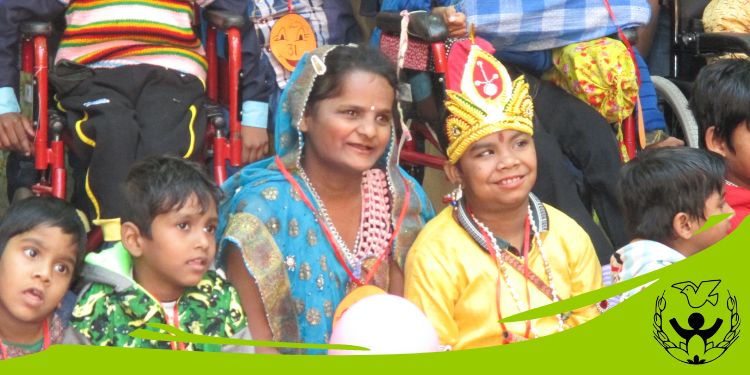
50 children with disabilities from Jaipur slums and related families

Partners

St Anselm School

Donors

Fondazione PIME, Association Friends of the Missionary Sisters of the Immaculate, Fondation Assistance Internationale

PROJECT

This project aims to the development and the social inclusion of children with disabilities living in Jawahar Nagar slum of Jaipur, in Rajasthan. It started in 2017.

Accordingly to Community Based Inclusive Development (CBID) methodology defined by WHO, we’re trying to promote social inclusion of children not only through physical rehabilitation, but also through the involvement of communities and families, based on 5 pillars: health, livelihood, education, social development and empowerment.

For this reason our operators are regularly visiting families, working with local communities about awareness, providing home based assistance and rehabilitation services.

A professional physiotherapist is taking care of this project, regularly visiting children at the center and teaching parents and rehabilitators all needed exercises for the improvement of their development  in order to make them able to replicate all exercises every day at home.

Usually CBID is operating exclusively on the field, directly at people’s homes and inside their communities. Slum’s context is not allowing home care treatments: often a whole family lives in one room without light or windows and it is consequently impossible to have the space to provide needed treatments. For this reason, and in order to grant a chance for children socialization, we created a center where they could receive individual treatments and attend individual or group therapies. On the territory other centers already exist with the same purpose, but they’re out of the reach of slum’s inhabitants (far away and very expensive), while our Navchetan center is at the entry of the slum and it is fully free.

This methodology is focusing on self-independency of people with disabilities and their families, for this reason we started up different activities to support families: advocacy, basic food provision to families and facilitation to access public schools.


CONTEXT

While India is better off in the social and education sectors, it is at the bottom of the list even amongst developing nations in healthcare. And within the country, Rajasthan is a laggard.

As per Census 2011 (2016 updated), in India, out of the 1.2 billion people, about 26,8 million people have some kind of disability which is 2.21% of the total population. At all India level, 7.62% of the disabled persons belonged to the age group 0-6 years (2,04 million). Thus, one in every 100 children in the age group 0-6 years suffers from some type of disability. It is a matter of serious concern as it has wider implications. In 15 States / UTs, the prevalence of disability (proportion of disabled persons to total population) is higher than that of the same at the all India level.

In spite of having a good policy for the disabled in practice most of the disabled don’t have access to education and special care. The illiteracy and lack of awarenessprevents the poor to benefit even from available services.

In 2011 census there were registered 238 slums in the city of Jaipur, with a population of 59.476 households. The constant growing of people with unstable jobs and low income almost doubled slums’ population during last 8 years.

Beneficiaries of our project are coming from Jaipur’s slums, where houses are often only one room where a whole family lives without windows or toilets. Slums’ population are from a lower caste, both at social and economic level, and they are mostly daily laborers came from villages to the big city.


CHILDREN WITH DISABILITIES

RELATIVES INVOLVED

NEWS

SONAM, TOWARDS AUTONOMY

SONAM, TOWARDS AUTONOMY

  We start our new column "STORIES FROM ANOTHER WORLD" with the story of Sonam, from India. With these stories we want to share with you some signs of hope from those contexts where hope seems unable to exist ... to proove that a better world is possible! Here is...
URMILA, A STORY OF WOMEN EMPOWERMENT

URMILA, A STORY OF WOMEN EMPOWERMENT

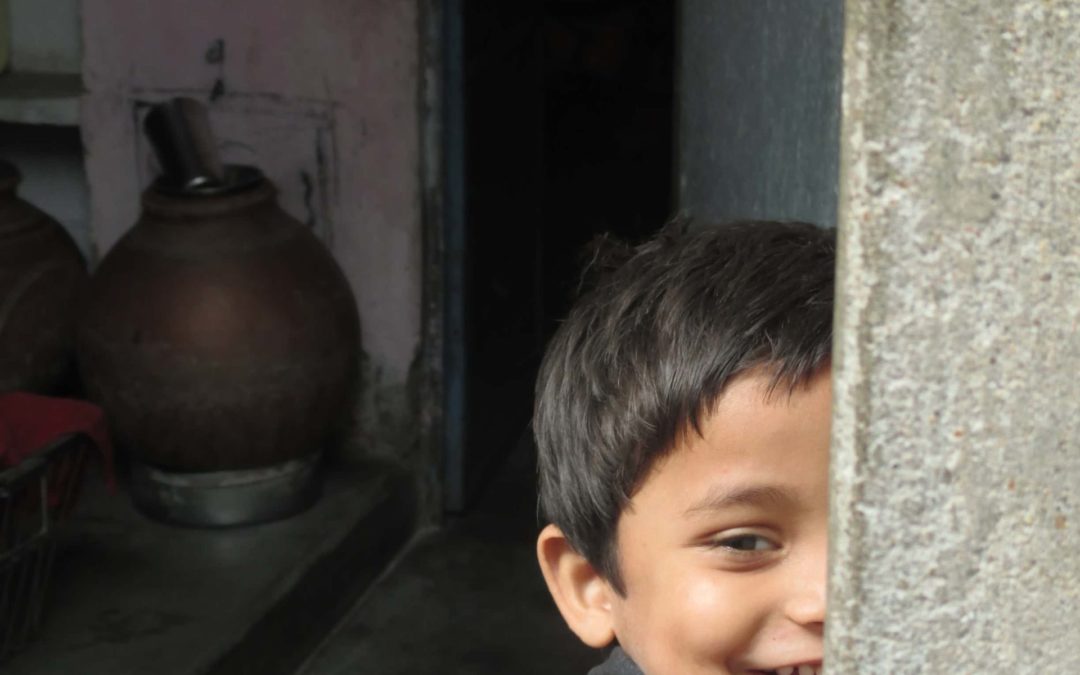
To celebrate the international day against violence on women we want to share with Urmila’s story, a story of strength and empowerment, a big example of women’s emancipation, coming from a slum in Jaipur where she works with our Navchetan’s children with disabilities....
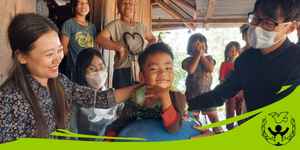
COMMUNITY BASED INCLUSIVE DEVELOPMENT (CBID)

COMMUNITY BASED INCLUSIVE DEVELOPMENT (CBID)

CBID is a development strategy which aims to ensure that people with disabilities are respected and included in their communities on an equal basis in all areas of life. It is people centred, community driven and human rights based. CBID is an essential contribution...

THE FLYING SCHOOL

THE FLYING SCHOOL

THE FLYING SCHOOL

CAMBODIA, Kompong Chhnang

Objective

Guarantee literacy teaching to children and adults in rural areas

Beneficiaries

600 adults attending literacy trainings; 1000 people, including childre and adults, who attend the mobile library every year

Partners

Ministry of Education

Donors

CEI

PROJECT

In the province of Kompong Chhnang New Humanity organizes literacy trainings for the adults, dedicating special attention to women.

At the same time, it organizes professional trainings, in particular sewing and handcraft, in order to offer families the opportunity to start up new income generating activities and to improve their living conditions.

In order to promote reading among children and adults, NHI created the “Flying library”, a mobile library that every week visits 18 villages in the province of Kompong Chhnang. The flying library lends books and organizes reading activities addressed to the young public, in order to bring children to the world of reading.

CONTEXT

In Cambodia the illiteracy rate among adult population is 26,4%, that reaches the peack of 42% among women. In rural areas the situation is even worse, with an illiteracy rate of 50%.
Promoting reading and literacy at an informal level is fundamental in order to make people aware about the importance of studying and to promote access to primary education.

adults

CHILDREN ATTENDING THE MOBILE LIBRARY

NEWS

UPDATES FROM THE EARTHQUAKE

UPDATES FROM THE EARTHQUAKE

On March 28, 2025, Myanmar was struck by a devastating earthquake measuring 7.7 on the Richter scale, with its epicenter just a few kilometers from the city of Mandalay. NHI immediately mobilized to reach the hardest-hit areas and, over the past two months, has...

read more
MAHMOUD, A LEADER OF TOMORROW

MAHMOUD, A LEADER OF TOMORROW

We're back with our feature 'Stories from Another World,' with a new story from our Oxy Jeunes center in Tunisia. Mahmoud tells us how his life has changed thanks to the support of the center, making him one of the future 'leaders' of his country. Our partner Amal...

read more
NEW HUMANITY ARRIVES IN CAMERUN!

NEW HUMANITY ARRIVES IN CAMERUN!

New Humanity arrives in Cameroon! After an initial evaluation mission in October 2023, New Humanity signed an agreement with the Fondation Bethleem de Mouda, which supports hundreds of people annually in various sectors. But let's start from the beginning... How did...

read more

HIGHER EDUCATION

HIGHER EDUCATION

HIGHER EDUCATION

CAMBODIA, Phnom Penh

Objective

Starting the first Master of Science in Sociology in Cambodia

Beneficiaries

150 university students

Partners

Royal University of Phnom Penh

Donors

CEI

PROJECT

In 2003 the rector of the Royal University of Phnom Penh made the proposal to start a Master of Science in Sociology and Anthropology. The goal of the program was to enhance the scientific research in the sociologic and anthropologic sector, introducing skills that were still underdeveloped in the Cambodian context.
Between 2004 and 2011, New Humanity promoted 6 editions of the Master. During the first 2 years of the program, almost the totality of graduated students opted for an academic career, creating a solid basis of skilled researchers and professors within the university.
Starting from the 3rd year of the program, the main professional progression were NGOs and public organizations in Cambodia, contributing with their acquired abilities to the development of their Country.
The collaboration with Phnom Penh university ended in 2011, when the University had acquired the experience and resources necessary to autonomously organize the Masters.
Today, the faculty of sociology is still the flagshio of the Royal University of Phnom Penh.

CONTEXT

The collaboration with the Royal University of Phnom Peng started in 1992. The legacy left by the Khmer Rouge dictatorship was still heavy: with the puprpose of deleting any bourgeois and occidental deviation, the regime had dismantled the education system at all levels. Intellectuals were the main victims of the extermination: before the regime in Cambodia there were 11.000 students enrolled in University, and only 450 survived to the regime.
In this context, New Humanity accepted a difficult challenge: restarting from higher education. A choice promoted by the Cambodian Ministry of Education itself, that asked New Humanity a support in order to relaunch the university studies in social sciences. This opened the path to a collaboration among the Royal University of Phnom Penh and various Italian and Asian university, that lead in 1994 to the naissance of the faculty of Sociology in the University of Phnom Penh.

STUDENTS TRAINED IN 6 YEARS

MASTER EDITIONS

NEWS

UPDATES FROM THE EARTHQUAKE

UPDATES FROM THE EARTHQUAKE

On March 28, 2025, Myanmar was struck by a devastating earthquake measuring 7.7 on the Richter scale, with its epicenter just a few kilometers from the city of Mandalay. NHI immediately mobilized to reach the hardest-hit areas and, over the past two months, has...

read more
MAHMOUD, A LEADER OF TOMORROW

MAHMOUD, A LEADER OF TOMORROW

We're back with our feature 'Stories from Another World,' with a new story from our Oxy Jeunes center in Tunisia. Mahmoud tells us how his life has changed thanks to the support of the center, making him one of the future 'leaders' of his country. Our partner Amal...

read more
NEW HUMANITY ARRIVES IN CAMERUN!

NEW HUMANITY ARRIVES IN CAMERUN!

New Humanity arrives in Cameroon! After an initial evaluation mission in October 2023, New Humanity signed an agreement with the Fondation Bethleem de Mouda, which supports hundreds of people annually in various sectors. But let's start from the beginning... How did...

read more

ECCE – EARLY CHILDHOOD CARE AND EDUCATION

ECCE – EARLY CHILDHOOD CARE AND EDUCATION

ECCE – EARLY CHILDHOOD CARE AND EDUCATION

CAMBODIA, Kompong Chhnang and Mondolkiri

Objective

Increasing the enrollment rate in primary school

Beneficiaries

1500 children and families

Partners

Aide et Action; Ministry of Education

Donors

CEI; We World Onlus; Fondazione PIME

PROJECT

Between 2007 and 2015 New Humanity International started up 20 classes of Early Childhood Education in the provinces of Kompong Chhnang and Mondolkiri. The classes welcome children aged 5 and work as a bridge with primary schools, providing children with all the skills and knoweledges that will enhance their academic inclusion.

In the Early Childhood Education Centers, children belonging to ethnic minorities have also the opportunity to learn Khmer language, that will be the official teaching language in the primary school. At the same time, New Humanity organizes trainings for teachers and trainings on health, education and agriculture for the parents, in order to enforce the competencies of the whole community and to improve the economic conditions of families.

Since 2015 the management of the classes has beed taken in charge directly by local communities, that guarantee the prosecution of the work started by New Humanity in the country.

CONTEXT

In Cambodia children begin their primary studies at the age of 6 and the government, though recognizing the importance of pre-school education, can’t guarantee an adequate number of kindergartens. The absence of this kind of education, together with the poverty of the families in rural areas, leads to low enrollment rate at the age of 6 (23,5% of children enroll in primary school at a higher age) and to a high school drop-out rate. In Cambodia is estimated that only 50% of the children complete the primary education, and in rural areas the rate is lower than 40%.

In Mondolkiri the situation is even more critique because most families belong the Phnong ethnic minority, that don’t speak Khmer (that is the official language in Cambodia and the teaching language in public schools), with the consequence that 6 children out of 10 don’t complete primary school.

CHILDREN WHO ATTENDED EARLY CHILDHOOD CARE CENTERS

EARLY CHILDHOOD CLASSES STARTED

NEWS

UPDATES FROM THE EARTHQUAKE

UPDATES FROM THE EARTHQUAKE

On March 28, 2025, Myanmar was struck by a devastating earthquake measuring 7.7 on the Richter scale, with its epicenter just a few kilometers from the city of Mandalay. NHI immediately mobilized to reach the hardest-hit areas and, over the past two months, has...

read more
MAHMOUD, A LEADER OF TOMORROW

MAHMOUD, A LEADER OF TOMORROW

We're back with our feature 'Stories from Another World,' with a new story from our Oxy Jeunes center in Tunisia. Mahmoud tells us how his life has changed thanks to the support of the center, making him one of the future 'leaders' of his country. Our partner Amal...

read more
NEW HUMANITY ARRIVES IN CAMERUN!

NEW HUMANITY ARRIVES IN CAMERUN!

New Humanity arrives in Cameroon! After an initial evaluation mission in October 2023, New Humanity signed an agreement with the Fondation Bethleem de Mouda, which supports hundreds of people annually in various sectors. But let's start from the beginning... How did...

read more

CAMBODIA – CAPABILITIES

CAMBODIA – CAPABILITIES

CAMBODIA – CAPABILITIES

CAMBODIA, Kompong Chhnang AND Kandal

Objective

All children and youths with disabilities have access to education

Beneficiaries

200 families with disabile children

Partners

Cam To Me Onlus

Donors

CEI; Misereor; Porticus; OBOS; Cam to Me Onlus; Fondazione PIME

PROJECT

Capabilities has many meanings. It’s a name that encloses the initials of the 3 pillars of our program: Care, Advocacy and Promotion for people with disabilities. But the name Capabilities also reminds us about our power and potential.

Our project includes different components, all equally essential:

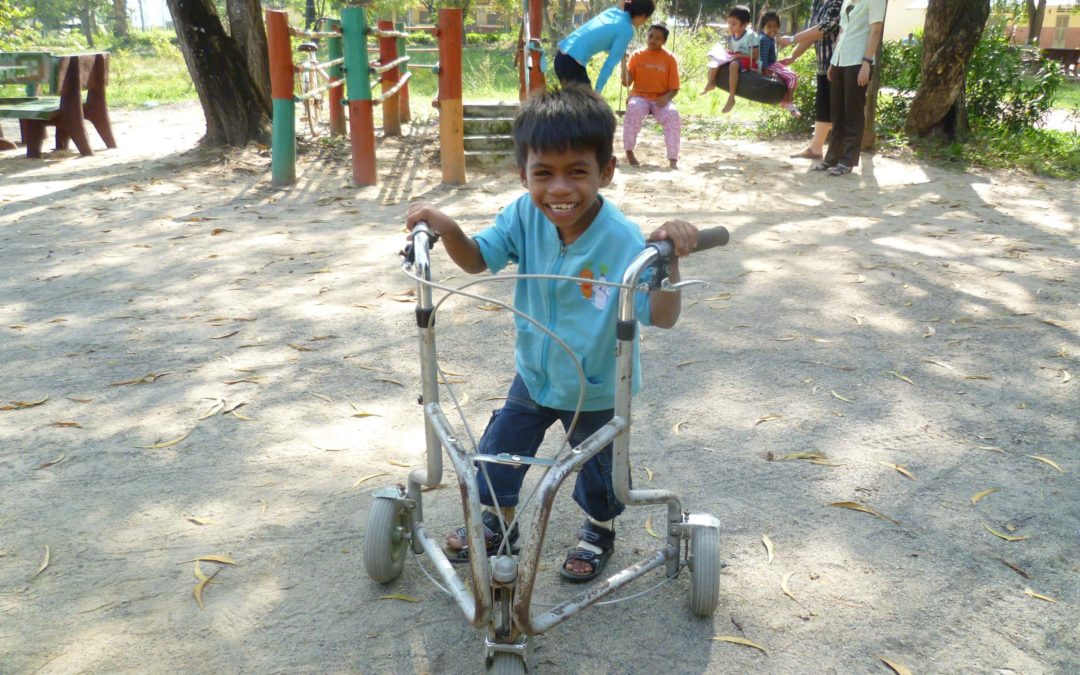
Care: New Humanity International manages 5 daily centers for children with disabilities. Each center hosts 15-20 children, mainly with intellectual disabilities. Children attend the center everyday, fron Monday to Friday, and have the opportunity to receive medical care, physiotherapy and special education. Also the parents are actively involved in the activity of the centers, taking part in volunteer turns in the kitchen or taking care of the cleaning.

Community Based Rehabilitation: Our staff also manages different activities directly in the villages, reaching all children who, for different reasons, don’t have the opportunity to go to the centers. The Community Based Rhabilitation foresees the direct involvement of families and of the whole community in which the children with disability live, and it’s the first step for their social inclusion.

Advocacy: Through a constant dialogue with local authorities and institutions and the organization of events in the villages or at National level, New Humanity International promotes the rights of children with disabilities, in order to guarantee their social inclusion.

Prevention: New Humanity International organizes meetings in the villages addressed to young women in order to promote early prevention of disability, with a particolar attention to prevention during pregnancy and early childhood.

Agricultural trainings: youth and adults with disabilities, together with their famiglie, have the opportunità to attend agricultural trainings on relevant issues such as domestic rearing, rice and vegetables cultivation, home-made fertilizers and greenhouses. The families who attend the trainings receive the material and support by our specialized staff in order to start up their own agricultural activities and

Since 2015, the project is under the responsabilità of the Dioceses of Battambang.

CONTEXT

In Cambodia, about 4,7% of the population has some kind of disability and most the 85% of people with disabilities live in rural areas.

The lack of public structures, together with the prejudice that often sees disability as a punishment, causes the isolation of people with disabilities.

CHILDREN ATTENDING DAILY CENTERS EACH YEAR

FAMILIES TAKING PART TO AGRICULTURAL TRAININGS EACH YEAR

NEWS

UPDATES FROM THE EARTHQUAKE

UPDATES FROM THE EARTHQUAKE

On March 28, 2025, Myanmar was struck by a devastating earthquake measuring 7.7 on the Richter scale, with its epicenter just a few kilometers from the city of Mandalay. NHI immediately mobilized to reach the hardest-hit areas and, over the past two months, has...

read more
MAHMOUD, A LEADER OF TOMORROW

MAHMOUD, A LEADER OF TOMORROW

We're back with our feature 'Stories from Another World,' with a new story from our Oxy Jeunes center in Tunisia. Mahmoud tells us how his life has changed thanks to the support of the center, making him one of the future 'leaders' of his country. Our partner Amal...

read more
NEW HUMANITY ARRIVES IN CAMERUN!

NEW HUMANITY ARRIVES IN CAMERUN!

New Humanity arrives in Cameroon! After an initial evaluation mission in October 2023, New Humanity signed an agreement with the Fondation Bethleem de Mouda, which supports hundreds of people annually in various sectors. But let's start from the beginning... How did...

read more